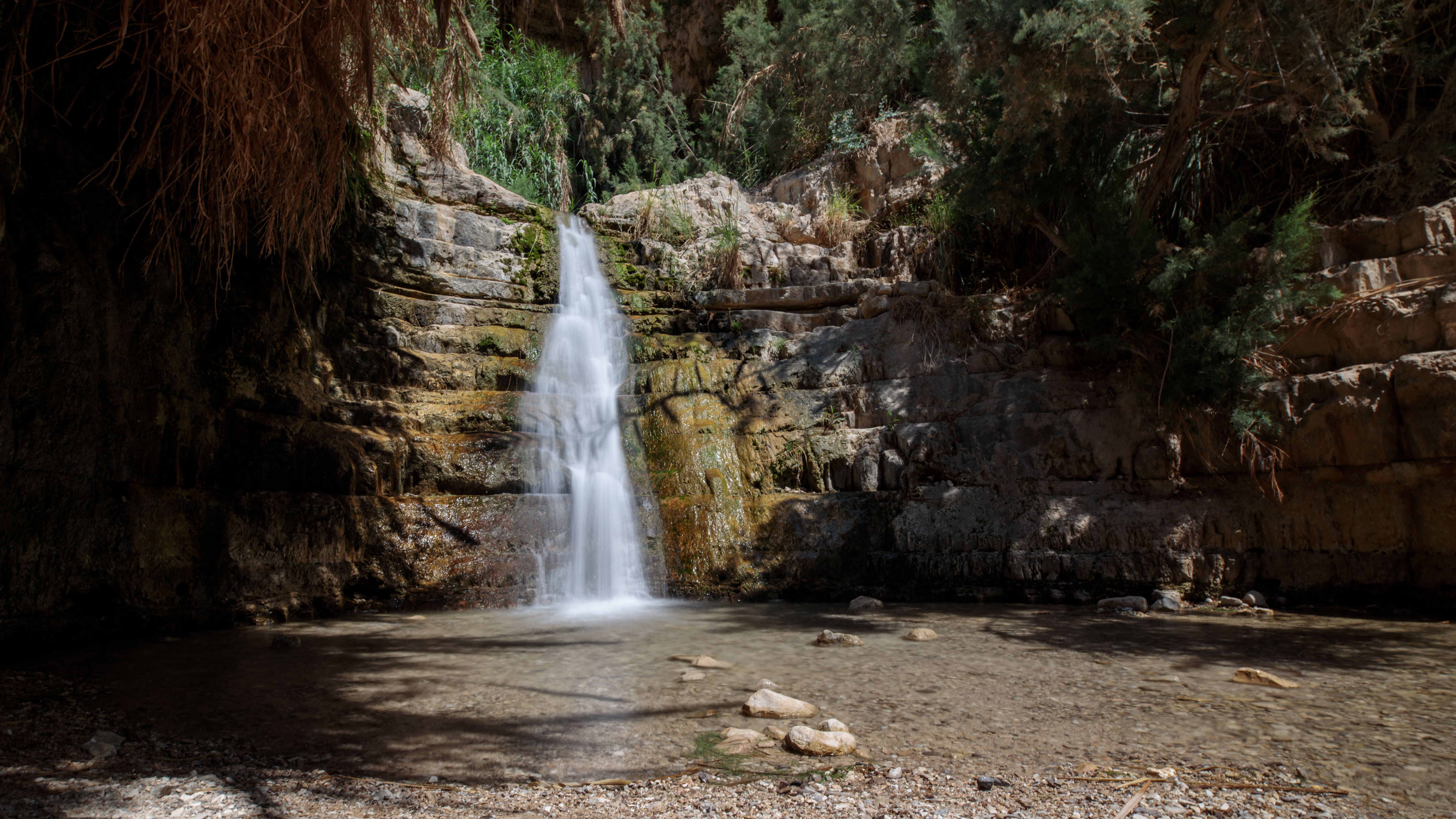
There’s a line in today’s First Reading that should stop us cold, because it charges God’s people with an act of almost comic stupidity. God says his people have done two evils. They walked away from him, “the fountain of living waters,” and then they went and dug themselves cisterns, “broken cisterns, that can hold no water” (Jeremiah 2:13). Picture the labor in that. You leave a spring that runs on its own, and you spend your strength chipping a pit out of rock, and the pit leaks. That’s what sin looks like from the inside. A man dying of thirst three feet from a stream, sweating over dry stone.
Today the Church gives us Saint Bridget of Sweden, who from the age of 7 saw Christ crucified in vision and kept drinking from that fountain her whole life, even from inside a royal court. And the Gospel tells us why most people never see the spring at all. Their hearts have “grown dull” (Matthew 13:15). So here’s the question for today, and it’s not comfortable: which broken well are you still digging, and would you recognize the fountain if you were standing in it?

A waterfall at the Ein Gedi oasis in the southern Judean desert, the kind of live spring that gives Jeremiah’s image its bite. Licensed via Adobe Stock, ID 368763705.
The Readings
First Reading: Jeremiah 2:1–3, 7–8, 12–13
The word of the Lord came to me, saying, “Go and proclaim in the hearing of Jerusalem, Thus says the Lord,
I remember the devotion of your youth, your love as a bride, how you followed me in the wilderness, in a land not sown. Israel was holy to the Lord, the first fruits of his harvest. All who ate of it became guilty; evil came upon them, says the Lord.”
And I brought you into a plentiful land to enjoy its fruits and its good things. But when you came in you defiled my land, and made my heritage an abomination. The priests did not say, ‘Where is the Lord?’ Those who handle the law did not know me; the rulers transgressed against me; the prophets prophesied by Ba’al, and went after things that do not profit.
Be appalled, O heavens, at this, be shocked, be utterly desolate, says the Lord, for my people have committed two evils: they have forsaken me, the fountain of living waters, and hewed out cisterns for themselves, broken cisterns, that can hold no water.
Gospel: Matthew 13:10–17
Then the disciples came and said to him, “Why do you speak to them in parables?” And he answered them, “To you it has been given to know the secrets of the kingdom of heaven, but to them it has not been given. For to him who has will more be given, and he will have abundance; but from him who has not, even what he has will be taken away. This is why I speak to them in parables, because seeing they do not see, and hearing they do not hear, nor do they understand. With them indeed is fulfilled the prophecy of Isaiah which says:
‘You shall indeed hear but never understand, and you shall indeed see but never perceive. For this people’s heart has grown dull, and their ears are heavy of hearing, and their eyes they have closed, lest they should perceive with their eyes, and hear with their ears, and understand with their heart, and turn for me to heal them.’
But blessed are your eyes, for they see, and your ears, for they hear. Truly, I say to you, many prophets and righteous men longed to see what you see, and did not see it, and to hear what you hear, and did not hear it.”
Scriptural Analysis
Start with the courtroom, because that’s what Jeremiah 2 is. The chapter reads like a lament, but underneath it runs a legal case. Scholars call it a rib, a covenant lawsuit, the same form the prophet Micah uses when God says “hear, O mountains, the controversy of the Lord” (Micah 6:1–2). That’s why verse 12 sounds so strange: “Be appalled, O heavens, at this.” God is calling the sky into the witness box.[1] Israel signed a covenant, the way a bride and groom sign a marriage, and the heavens were there when the vows were made. Now the wronged party is summoning the witnesses.
And notice how God opens his case. Not with the sins first, but with the honeymoon. “I remember the devotion of your youth, your love as a bride, how you followed me in the wilderness” (Jeremiah 2:2). The word behind “devotion” is hesed, covenant loyalty, and the whole picture of Israel as Yahweh’s bride goes back to the prophet Hosea, who lived a broken marriage as a sign of God’s own.[2] The desert years, which Israel remembered as misery, God remembers as courtship. She had nothing out there but him, and that was the point. Then verse 3 raises the stakes: Israel was “holy to the Lord, the first fruits of his harvest.” First fruits were consecrated, set apart, and could not be put to ordinary use (see Exodus 23:19). Israel belonged to God the way the first sheaf of wheat belonged to God. To harm her was to commit sacrilege.[3]
So the fall in verses 7 and 8 lands hard. God brought her “into a plentiful land,” which the Hebrew paints as a garden, and she “defiled” it. That’s Eden language on purpose. Give a people paradise, and they’ll foul it. And the collapse ran straight through the leadership. The priests, whose one job was to keep the people facing God, “did not say, ‘Where is the Lord?’” The men who handled the Torah “did not know me.” The word for “rulers” is literally shepherds, and the shepherds “transgressed.” The prophets spoke for Baal and chased after “things that do not profit,” which in Hebrew is a pun on the name Baal itself, the useless lord.[4] Every office God built to carry his people to the fountain broke at once.
Which brings us to the verdict, the two evils of verse 13, and this is the theological heart of the reading. “They have forsaken me, the fountain of living waters, and hewed out cisterns for themselves, broken cisterns, that can hold no water.” A fountain in the ancient Near East meant a source that never quit, spring water welling up from the ground. A cistern was a man-made pit for catching rain, second-rate even when it worked, and a cracked one was worthless. God is saying they traded a living spring for a leaking hole they dug themselves. Every idol is a broken cistern. It promises to hold what only God holds, and it can’t, and you’re thirsty again by morning. This is the same living water Jesus offers the Samaritan woman, water welling up to eternal life (John 4:14), the rivers he promises will flow from the believer’s heart (John 7:38). The Catechism puts our whole spiritual life under this sign: God thirsts for us so that we will thirst for him (CCC 2560).
Now walk into the Gospel with that thirst in mind, because Matthew 13 is asking why people can’t see the fountain even when he’s standing in front of them. The disciples ask why he teaches in parables, and the timing matters. This is the same day the Pharisees decided to destroy him (Matthew 12:14), the day they called his miracles the work of Satan. The parables come as a response to a hardening that’s already set in.[5] A parable, a mashal, was a riddle meant to make you think, and in the Old Testament it was often the instrument of judgment. Nathan trapped David with one (2 Samuel 12), and Isaiah sang one against the vineyard of Israel (Isaiah 5). So when Jesus veils the kingdom in stories, he’s doing something merciful and something judicial at once. The willing lean in and get more. The hardened hear a pleasant tale and walk off unchanged.
That’s what he means by the hard saying: “To him who has will more be given… but from him who has not, even what he has will be taken away.” This is about the “secrets of the kingdom,” the divine plans no one can crack open without God handing them over (CCC 787).[6] And here Saint Thomas Aquinas makes the point that keeps this from turning into spiritual snobbery. Commenting on this verse, he lists what a person needs to receive the mysteries: study, charity, faith. And then he stops himself and warns against “a certain error,” the idea that we could earn eternal glory by our own effort and natural gifts. He quotes Saint Paul, “what have you that you have not received?” (1 Corinthians 4:7), and concludes that the desire, the zeal, the charity, and the faith “all these things are from God.”[7] Read that against Jeremiah, and it clicks. You cannot dig your own cistern of salvation. Even the thirst that sends you back to the fountain is a grace the fountain gave you.
Then Jesus quotes Isaiah, the same prophet whose vineyard song condemned Israel: “this people’s heart has grown dull.” Aquinas catches something precise in the Latin here. The heart, meaning the mind, “grows gross” when it fixes on earthly things, and it grows fine and sharp when it’s drawn upward, “as in the apostles,” who “look not at the things which are seen, but at the things which are not seen” (2 Corinthians 4:18).[8] The dull heart of the Gospel is the same heart that dug the cisterns in Jeremiah. Stare long enough at the leaking pit you made, and you lose the eyes for running water. Idolatry blinds the very person committing it.
And that’s why the blessing at the end is so weighty. “Blessed are your eyes, for they see.” Aquinas reads this beatitude as nothing less than a down payment on heaven, because “the glory of man is in the vision of God,” and to truly see Christ now is to share, in part, the vision that is eternal life.[9] The prophets and righteous men “longed to see what you see, and did not see it.” Bridget of Sweden stands squarely in that blessing. She was no scholar decoding a riddle. God simply gave her eyes, from childhood, to see the crucified Lord, and everything she did afterward flowed from what she saw.
Daily Application
So let’s get honest about our own cisterns, because the reading isn’t asking us to feel sorry for ancient Israel. It’s holding up a mirror. A broken cistern is anything you go to for what only God can give: the career you’ve made carry your whole sense of worth, the relationship you’ve asked to complete you, the approval you refresh your phone to find, the control you white-knuckle so you never have to trust. None of these are evil in themselves. They become the sin of Jeremiah 2 the moment you back away from the fountain and start hacking at them for water. And they always leak. That anxious, thirsty-by-morning feeling is the fountain reminding you it’s still running, while you keep sanding the walls of a pit that will never hold.
Here’s the interior move today asks of you, and it’s harder than it sounds. Repentance, in this reading, is mostly about admitting you’ve been digging in the first place. The proud part of us wants to fix the leak, seal the cracks, engineer a cistern that finally holds, which is just idolatry with better tools. Aquinas already took that option off the table: even your desire for God is a gift from God. So the honest prayer sounds like this: “I can’t hold water, and I’m coming home to the spring.” That’s what the confessional is for. That’s what the Eucharist is, the living water that Israel walked away from, handed back to you under the form of bread. You could never earn your way to the fountain anyway. You only have to stop digging long enough to drink.
And look at how Bridget shows this works in an ordinary life, because she wasn’t a hermit. She was a wife, the mother of 8 children, a woman who lived in the machinery of a royal court and spent years pushing a king toward reform. Her visions didn’t pull her out of the world’s business. They drove her into it, into founding an order, into a plague-stricken Rome, into a final shipwrecked pilgrimage that cost her a son. She saw no contradiction between drinking from the fountain and working in the marketplace. Her sanctity was proof that once you’ve come back to the spring, you carry water into the very places that dried you out. That’s the vocation of most of you reading this, in an office or a kitchen or a hospital room, not away from the world but soaked through and useful in it.
So do one concrete thing today. Name the cistern, out loud, the specific broken thing you keep going to instead of God. Then take that exact thirst to the spring: ten honest minutes of prayer, or the sacrament of Confession this week, or one long look at the crucifix the way Bridget looked at it. Stop digging, and drink.
Notes
-
John Bright, Jeremiah, Anchor Bible 21 (Garden City, NY: Doubleday, 1965), notes on Jeremiah 2:8, 2:12, and Comment on chapter 2. On the summons to the heavens as a feature of Yahweh’s rib (covenant lawsuit), Bright compares Micah 6:1–2. ↩
-
Bright, Jeremiah, note on Jeremiah 2:2, on hesed and the marriage figure drawn from Hosea 1–3. ↩
-
Bright, Jeremiah, note on Jeremiah 2:3, on Israel as the “first fruits,” holy and consecrated to Yahweh (cf. Exodus 23:19; Numbers 18:12–13). ↩
-
John Bright, Jeremiah, Anchor Bible 21 (Garden City, NY: Doubleday, 1965), notes on Jeremiah 2:8, 2:12, and Comment on chapter 2. On the summons to the heavens as a feature of Yahweh’s rib (covenant lawsuit), Bright compares Micah 6:1–2. ↩
-
Curtis Mitch and Edward Sri, The Gospel of Matthew, Catholic Commentary on Sacred Scripture (Grand Rapids, MI: Baker Academic, 2010), 176–77, on the setting of the parables after Matthew 12 and on the mashal as an instrument of judgment (2 Samuel 12:1–10; Isaiah 5:1–7). ↩
-
Mitch and Sri, Gospel of Matthew, 176, on the “mysteries of the kingdom” as divine plans hidden until God reveals them; see Catechism of the Catholic Church, 2nd ed. (Vatican City: Libreria Editrice Vaticana, 1997), no. 787. ↩
-
Thomas Aquinas, Commentary on the Gospel of Matthew, chapter 13, lecture 1, no. 1106, on Matthew 13:12: desire, zeal, charity, and faith “all these things are from God” (citing 1 Corinthians 4:7). ↩
-
Aquinas, Commentary on the Gospel of Matthew, chapter 13, lecture 1, no. 1111, on Matthew 13:15, on the mind that “grows gross” when fixed on earthly things and is “made fine” when drawn to what is unseen (citing 2 Corinthians 4:18). ↩
-
Aquinas, Commentary on the Gospel of Matthew, chapter 13, lecture 1, nos. 1116–1119, on Matthew 13:16–17, on the beatitude of sight as a participation in the vision of God (citing Jeremiah 9:23–24), and reconciling this with John 20:29. ↩
Leave a Reply