A farmer in the ancient Near East threw his seed by hand, and some of it was going to die. He knew that before he ever walked into the field. Birds waited on the path. Rock sat an inch under the thin soil. Thorns were already there, ready to come up with the wheat. And still he sowed, broadcasting the seed everywhere, because the harvest was worth the loss. That is the picture Jesus hands us today, and then he does something he rarely does. He stops teaching in riddles and explains the whole thing. He tells us plainly what happens to the word of God once it leaves his mouth and lands in a human heart. The question he leaves hanging is the one worth sitting with: which soil are you, right now, this week?

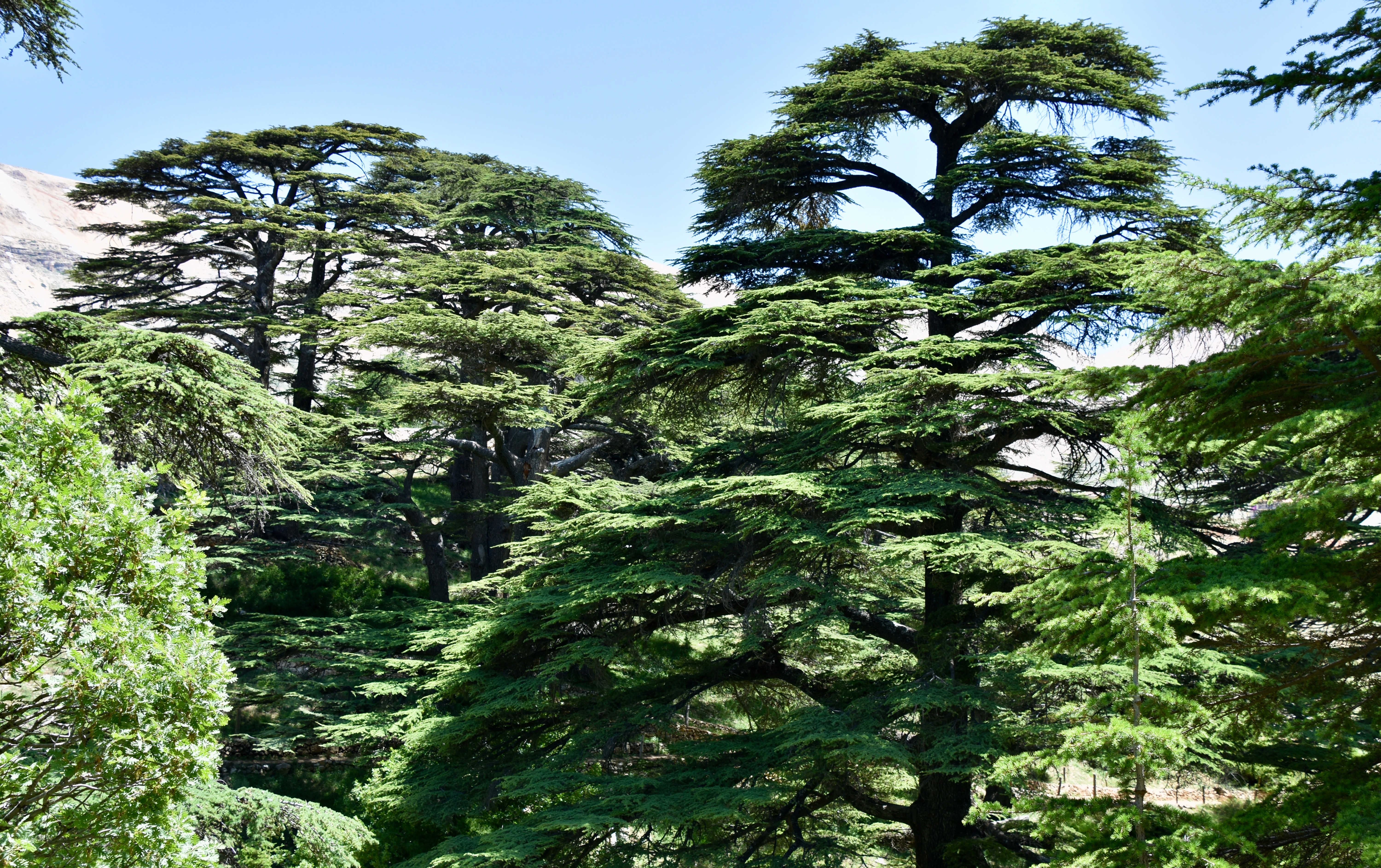
The Cedars of God, Lebanon, the mountains that shaped Saint Sharbel Makhlouf. Licensed via Adobe Stock, ID 370102882.
The Readings
First Reading: Jeremiah 3:14–17
Return, O faithless children, says the Lord; for I am your master; I will take you, one from a city and two from a family, and I will bring you to Zion.
“’And I will give you shepherds after my own heart, who will feed you with knowledge and understanding. And when you have multiplied and increased in the land, in those days, says the Lord, they shall no more say, ”The ark of the covenant of the Lord.” It shall not come to mind, or be remembered, or missed; it shall not be made again. At that time Jerusalem shall be called the throne of the Lord, and all nations shall gather to it, to the presence of the Lord in Jerusalem, and they shall no more stubbornly follow their own evil heart.
Gospel: Matthew 13:18–23
“Hear then the parable of the sower. When any one hears the word of the kingdom and does not understand it, the evil one comes and snatches away what is sown in his heart; this is what was sown along the path. As for what was sown on rocky ground, this is he who hears the word and immediately receives it with joy; yet he has no root in himself, but endures for a while, and when tribulation or persecution arises on account of the word, immediately he falls away. As for what was sown among thorns, this is he who hears the word, but the cares of the world and the delight in riches choke the word, and it proves unfruitful. As for what was sown on good soil, this is he who hears the word and understands it; he indeed bears fruit, and yields, in one case a hundredfold, in another sixty, and in another thirty.”
Scriptural Analysis
Start with Jeremiah, because the First Reading sets up the whole problem the Gospel answers. Jeremiah is preaching to a people who have broken faith with God so completely that the prophet has spent two chapters calling the nation an unfaithful wife. Israel chased other gods the way a person chases lovers. By every measure of the old covenant, she has no claim left on God’s mercy. And then, in the middle of that indictment, God says something staggering: “Return, O faithless children, says the Lord; for I am your master” (Jeremiah 3:14). The Hebrew behind “master” carries the sense of husband. God is telling the very people who abandoned him that the marriage is not over. He will take them back, one from a city and two from a family, and bring them home to Zion.
Notice what he promises them there. He promises shepherds. “Shepherds after my own heart, who will feed you with knowledge and understanding” (Jeremiah 3:15). The Navarre Bible commentary points out that this is a promise of a new kind of leadership, a new priesthood, one that will feed the people not with ritual alone but with the knowledge of God himself.[1] Then Jeremiah says the ark of the covenant, the single holiest object in Israel, the gold box that held the tablets of the law and marked God’s presence among his people, will one day not even be missed. It “shall not come to mind, or be remembered, or missed; it shall not be made again” (Jeremiah 3:16). For an Israelite, that sentence should have been unthinkable. The ark was everything. Why would you not miss it? Because, Jeremiah says, “At that time Jerusalem shall be called the throne of the Lord, and all nations shall gather to it” (Jeremiah 3:17). The presence of God will no longer be locked in a box in one room. It will fill a city, and the city will draw the whole world. This is Jeremiah reaching past the return from exile toward something bigger, the day when God writes his covenant not on stone tablets in an ark but on human hearts, the New Covenant he names a few chapters later (Jeremiah 31:31–33).[2]
That is the hinge into the Gospel. Because the word of God finally sown into human hearts is exactly what Jesus is describing in the parable of the sower. The seed is the word of the kingdom. The soil is the human heart. And here is a detail worth sitting with: when St. Thomas Aquinas comments on this very passage in Matthew, and reaches the hardened hearts that hear the word and refuse it, the line he reaches for to describe God still calling them back is Jeremiah 3:14, “Return, O revolting children, says the Lord, for I am your husband.”[3] Aquinas saw the two readings we have today as one thought. The God who begged faithless Israel to come home is the same sower still casting his word onto rocky, thorny, trampled ground, refusing to stop.
Walk the four soils the way Jesus does. The seed on the path is the one who hears the word and does not understand it, and the evil one snatches it away. The Catholic Commentary on Sacred Scripture notes that Matthew has a specific target in mind here: the Pharisees, who have so misread Jesus that they accuse him of casting out demons by the devil, and the towns that watched his miracles and still would not repent.[4] The seed never even breaks the surface. The birds, Satan, carry it off.
The rocky ground is more painful, because it looks like success at first. This person hears the word and receives it at once with joy. But there is no depth, no root, so when tribulation or persecution comes “on account of the word,” he falls away immediately (Matthew 13:21). Faith that costs nothing collapses the moment it costs something. The seed among thorns is subtler still. The word takes root, but “the cares of the world and the delight in riches choke the word” (Matthew 13:22). Mitch and Sri connect this soil directly to the rich young man who walks away from Jesus sad, unwilling to part with his possessions (Matthew 19:16–22).[5] The thorns are not obviously evil. Anxiety, money, the ten thousand ordinary worries of a life. They crowd the word slowly and quietly until it suffocates.
Then the good soil, the one who “hears the word and understands it” and bears fruit, a hundred or sixty or thirtyfold (Matthew 13:23). Understanding is the hinge. Aquinas asks what makes a heart good soil, and his answer is worth memorizing, because it is a spiritual examination in four questions. He says four things prepare a person to receive the word and keep it: desire, zeal, charity, and faith.[6] Desire, because “the desire of wisdom brings to the everlasting kingdom” (Wisdom 6:21), and God gives to the one who asks. Zeal, the willingness to dig for the word like a man digging for buried treasure, because natural talent without effort bears nothing. Charity, which Aquinas calls the root of every good work, “for whatever good a man has without charity is nothing” (1 John 3:14). And faith, because “all that is not of faith is sin” (Romans 14:23). Take away any one of the four and the soil turns rocky or thorny. That is why the word can fall on two people in the same pew and take root in only one.
The tradition even reads the hundred, sixty, and thirty as degrees of that fruitfulness. Aquinas passes on the reading of the Fathers that the hundredfold belongs to the martyrs, the sixtyfold to virgins, the thirtyfold to the married, three real vocations, three real harvests.[7] He offers St. Augustine’s version too: the thirtyfold is the one heavily tempted who resists, the sixtyfold the one who rises up, the hundredfold the one who has come to rest in God.[8] Do not miss the point under the numbers. Even thirtyfold is a harvest. The parable asks one thing of you: whether the seed is alive in you at all.
Daily Application
So which soil are you? The honest answer is probably all four, on different days, in different corners of your life. And that should be a relief, because the whole reason Jesus explains this parable is so you can do something about the ground you are standing on.
The thorns are the ones I would watch this week, because they are the ones that get most of us. Nobody reading this is likely to be the trampled path, hearing the Gospel and feeling nothing. You are here. You are reading Scripture. The danger for a practicing Catholic is the third soil, where the word genuinely took root years ago and is slowly being strangled by good, ordinary, respectable things. The mortgage. The kids’ schedule. The promotion. The endless low hum of worry that fills every quiet moment so the word never gets any silence to grow in. Jesus is asking for something smaller and harder: notice what is crowding him out, and pull some weeds. Keep the job. Keep loving your family. Just look honestly at what has grown up thick around the word and start clearing it. That is what an examination of conscience is. That is what Confession is, a spade in the soil.
And here is where Aquinas is so practical. If good soil comes down to desire, zeal, charity, and faith, then those are the four things you can actually cultivate. You cannot make yourself bear a hundredfold by willpower. But you can want the word more, so ask for it. You can work at it, so read the passage twice instead of once. You can love, so do the concrete act of charity you have been avoiding. You can believe, so bring your doubts to God instead of nursing them alone. Soil does not improve on its own. It gets turned, watered, fed. The sacramental life of the Church is exactly that cultivation, the Eucharist and Reconciliation working the ground of your heart week after week.
Today the Church remembers Saint Sharbel Makhlouf, and he is the parable made flesh. A Lebanese monk who lived the last 23 years of his life as a hermit in the mountains, he did almost nothing the world would notice. He never traveled far from the village where he was born. He said Mass, he prayed, he kept silence. From the outside his life looks like thirtyfold at best. And yet his tomb became a place of miracles for Christians and Muslims alike, and his influence has reached farther than most kings. That is the paradox of the good soil. The seed grows in secret, in the quiet, in a heart that stopped letting the thorns win. Saint John Paul II said the Church breathes with two lungs, East and West, and Sharbel is one of the deep breaths of the Eastern lung. The greatness was never his. He let the word do great things in him.
Be the good soil. Turn over the ground the thorns have claimed, ask God for the desire to want him more, and let his word sink deep enough this week that no drought can scorch it. The sower is still throwing seed. Give it somewhere to grow.
Notes
- The Navarre Bible: The Major Prophets (Dublin: Four Courts Press; New York: Scepter, 2005), commentary on Jeremiah 3:14–18, 313–314.
- The Navarre Bible: The Major Prophets, commentary on Jeremiah 3:14–18, 314.
- Thomas Aquinas, Commentary on the Gospel of Matthew, chap. 13, no. 1112, on Matthew 13:15.
- Curtis Mitch and Edward Sri, The Gospel of Matthew, Catholic Commentary on Sacred Scripture (Grand Rapids, MI: Baker Academic, 2010), 178.
- Mitch and Sri, Gospel of Matthew, 178.
- Thomas Aquinas, Commentary on the Gospel of Matthew, chap. 13, nos. 1102–1105, on Matthew 13:12.
- Thomas Aquinas, Commentary on the Gospel of Matthew, chap. 13, no. 1093, on Matthew 13:23.
- Thomas Aquinas, Commentary on the Gospel of Matthew, chap. 13, no. 1096, on Matthew 13:23.
Leave a Reply