
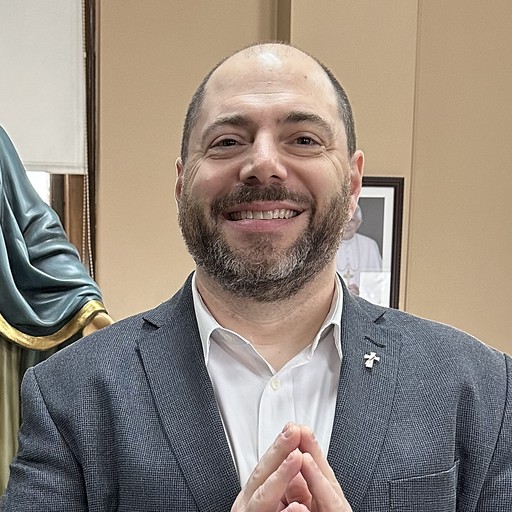
Pope Leo XIV treats the automation of work as a question about the human person rather than an economic forecast, and in Magnifica Humanitas he asks for something more demanding than compensation for the displaced. He asks that the transformation be governed before it happens rather than cleaned up afterward.
Why work carries this much weight
The Church’s position on work is older than the technology, and Leo grounds it where the tradition grounds it. Since Rerum Novarum, the Magisterium has recognized in work “the essential key” to the whole social question (§148). Created in the image of the Creator, our work in some way continues his, and through it we “contribute to the progress of society and the common good, put to good use the capabilities we have received, improve and beautify the world, support our families” (§148).
From which follows the sentence that governs everything after it:
“For these reasons, work is not simply an instrument; it expresses and enhances the dignity of our lives. It is a requirement of the human condition, a normal path toward maturity, development and personal fulfillment.” (§149)
Leo draws an immediate practical conclusion that cuts against the most popular policy answer. Financial assistance “may at times be necessary in emergencies, but it cannot become the sole response, since the goal is to enable each person to live with dignity through his or her own work” (§149). Anyone who assumes the Church would simply endorse a transfer payment as the solution to automation should sit with that line.
The harm that arrives before the job loss
The encyclical’s most useful contribution is that it does not begin with unemployment. It begins with what happens to people who keep their jobs. Leo quotes at length the finding that AI
“frequently forces workers to adapt to the speed and demands of machines, rather than machines being designed to support those who work. As a result, contrary to the advertised benefits of AI, current approaches to technology can paradoxically de-skill workers, subject them to automated surveillance and relegate them to rigid and repetitive tasks.” (§150)
He adds that keeping pace with the technology “can erode workers’ sense of agency and stifle the innovative abilities they are expected to bring to their work” (§150). A worker can be fully employed, drawing a wage, and steadily stripped of the judgement that made the work his.
What he actually predicts
Leo is careful not to forecast. What he describes is unevenness, and section 153 is the passage to know:
“Wealthy societies automate rapidly and chaotically, reducing the need for a workforce and creating room for unemployment and institutional friction. Vast regions of the world, by contrast, remain trapped in hybrid economies, where underpaid human labor and partial technologies coexist without achieving genuine transformation.” (§153)
The second half of that is rarely quoted and is the sharper claim. Poorer regions do not get the automation or the jobs. They get precarious labour, instability and forced migration. Leo concludes that “no single model of change or universal solution exists” (§153), which is his own warning against reading a policy program out of the document.
He also names the shape of the inequality already visible: “outsized remuneration for a highly specialized minority alongside declining wages for a large portion of the workforce” (§151).
The ask: govern it in advance
Section 156 is the operative one, and it opens with the standard Leo is setting:
“At this time of transition, it is not enough to react only when jobs disappear; we must oversee the transformation in advance.” (§156)
Three things follow. Social criteria for innovation, so that “every introduction of automation and AI should be accompanied by verifiable measures to protect the employment, retraining and participation of workers.” Proactive policies making retraining accessible, “ensuring that the cost of adaptation does not fall solely on individuals.” And a corporate commitment “to include quality and dignity of work among its indicators of success” (§156).
His summary of the stakes is the cleanest sentence in the chapter: with these conditions, innovation can be “an ally of safer, more creative and dignified work; without them, innovation tends to become an accelerator of injustice” (§156).
The warning about a jobless prosperity
Leo raises a possibility that rarely appears in economic debate. A society could automate successfully, distribute the proceeds, and still fail. A society that guarantees work to only a small fraction of its people “risks exposing many to forced inactivity, a lack of responsibility and the absence of daily tasks and stimuli, resulting in human and cultural impoverishment” (§154). He calls this “a paradox of material progress and anthropological regression” (§154).
Where faithful Catholics can disagree
That automation must not be pursued without regard for the people it displaces is a principle, and Leo states it as one. Which policies follow is prudential. Retraining schemes, transition periods, tax structures, sectoral bargaining and the rest are matters on which Catholics who accept every word of this encyclical can reach different conclusions. Leo says as much himself when he insists that solutions must be found “at national and local levels through the involvement of intermediary communities” (§153).
Every section reference is to Leo XIV, Magnifica Humanitas (15 May 2026). The full guide to the encyclical is here.
Related
- Rerum Novarum and Artificial Intelligence: Why Leo XIV Went Back to 1891
- What Did Pope Leo Ask Governments to Do About AI?
The Catholic Citizen starts with this encyclical
Module 1 of The Catholic Citizen works through Magnifica Humanitas over four Thursdays — human dignity, moral responsibility, work, and who owns the common inheritance of data — one issue a week, every claim cited by paragraph number. The curriculum page lists the module in full. Free reflections on the daily Mass readings arrive Saturdays.
Leave a Reply