Jeremiah calls God a dry creek bed. Martha tells Jesus he showed up too late. Same accusation, different centuries.
That accusation belongs to devout people. You only complain about a friend’s absence if you expected him to come. Jeremiah had eaten God’s words and found them sweet (Jeremiah 15:16), and then he sat alone under the weight of God’s hand, wondering why the wound refused to close. Martha had fed Jesus in her own kitchen, and she buried her brother anyway.
What the complaint exposes is a quiet arithmetic most of us run without admitting it. We measure God’s love by his punctuality. If he arrives on time, he loves us. If he waits four days, something has broken in the relationship. Both readings today take that arithmetic apart. God answers Jeremiah with a command and a promise. Jesus answers Martha with a claim about himself, and then with a question that has never stopped being asked.
Today the Church celebrates Saints Martha, Mary, and Lazarus, three friends of Jesus who watched him arrive late and loved him anyway. So read the last line of the Gospel as spoken to you, because it is.

The Readings
First Reading: Jeremiah 15:10, 16-21
Woe is me, my mother, that you bore me, a man of strife and contention to the whole land! I have not lent, nor have I borrowed, yet all of them curse me.
Thy words were found, and I ate them, and thy words became to me a joy and the delight of my heart; for I am called by thy name, O Lord, God of hosts. I did not sit in the company of merrymakers, nor did I rejoice; I sat alone, because thy hand was upon me, for thou hadst filled me with indignation. Why is my pain unceasing, my wound incurable, refusing to be healed? Wilt thou be to me like a deceitful brook, like waters that fail?
Therefore thus says the Lord: “If you return, I will restore you, and you shall stand before me. If you utter what is precious, and not what is worthless, you shall be as my mouth. They shall turn to you, but you shall not turn to them. And I will make you to this people a fortified wall of bronze; they will fight against you, but they shall not prevail over you, for I am with you to save you and deliver you, says the Lord. I will deliver you out of the hand of the wicked, and redeem you from the grasp of the ruthless.”
Gospel: John 11:19-27
And many of the Jews had come to Martha and Mary to console them concerning their brother. When Martha heard that Jesus was coming, she went and met him, while Mary sat in the house. Martha said to Jesus, “Lord, if you had been here, my brother would not have died. And even now I know that whatever you ask from God, God will give you.” Jesus said to her, “Your brother will rise again.” Martha said to him, “I know that he will rise again in the resurrection at the last day.” Jesus said to her, “I am the resurrection and the life; he who believes in me, though he die, yet shall he live, and whoever lives and believes in me shall never die. Do you believe this?” She said to him, “Yes, Lord; I believe that you are the Christ, the Son of God, he who is coming into the world.”
Scriptural Analysis
Jeremiah’s Second Confession
Scholars call Jeremiah 15:10-21 the prophet’s second “confession,” one of those passages where he stops preaching and starts arguing with God. He opens his heart in verses 10 and 11 as though he were speaking to his mother, to himself, and to God all at once, and then in verses 15 through 21 he lodges a formal complaint, which God answers by telling him exactly what he must do next.[1] The Church skips verses 12 through 14 today for a good reason: they break the thread of the passage and turn up again almost word for word at Jeremiah 17:3-4.[1]
“A man of strife and contention to the whole land” is courtroom language in Hebrew. The two nouns, rib and madon, both come from the vocabulary of legal proceedings. Jeremiah is describing himself as a man perpetually at law with his own people.[2] And notice his defense: “I have not lent, nor have I borrowed.” He is not owed money and he owes none. Nobody in Judah has a financial grievance against him. They curse him purely for the message, which is the loneliest kind of hatred there is.
Then comes the line that should stop us. “Thy words were found, and I ate them.” Jeremiah swallowed the word of God, the way Ezekiel would later be handed a scroll and told to eat it (Ezekiel 2:8-3:3). And the taste was joy. The delight of his heart. Which makes the next verse harder: the same prophet who ate God’s word like honey now sits alone, excluded from every party in town, because God’s hand is on him. That exclusion was not a mood. God had forbidden him to attend wakes or feasts, and forbidden him to marry, so that his own life would become an argument the people could not ignore (Jeremiah 16:1-9).[1] He is celibate, unwelcome, and cursed, and he is these things on purpose.
So he asks God a question so blunt it barely survives translation into piety: “Wilt thou be to me like a deceitful brook, like waters that fail?” The Hebrew describes a wadi, a desert stream bed that runs full in the rainy season and goes bone dry exactly when you need it in summer. You cannot build a life around it.[3] And here is the knife. Thirteen chapters earlier, Jeremiah had indicted Israel for abandoning “the fountain of living waters” and digging out “broken cisterns that can hold no water” (Jeremiah 2:13). The word he used for God then, he now takes back. He is accusing God of being the broken cistern.
God’s answer arrives in verse 19 and it does not sound like comfort. “If you return, I will restore you.” The Hebrew turns on a single verb, shub, to turn: if you turn, I will turn you.[4] The prophet whose entire job is preaching repentance to Judah is told to repent himself. Origen saw the reach of this: “This is meant for everyone, for God is always calling on us to return to him.”[5] Before Jeremiah can be God’s mouth again he has to stop putting worthless words in it, which is what “if you utter what is precious, and not what is worthless” means. Talking the way he has just talked, he cannot be a mouthpiece.[4]
And then, having asked for repentance, God renews the original call almost verbatim. “A fortified wall of bronze,” “I am with you,” “they shall not prevail over you.” Compare Jeremiah 1:18-19 and you are reading the same sentences.[6] God never promises there will be no fight. He promises the fight will not finish him, and he promises presence. That is the whole answer to the dry-brook accusation: not an explanation of the drought, but a person standing there.
Martha At The Edge Of Bethany
Now put Martha’s sentence next to Jeremiah’s. “Lord, if you had been here, my brother would not have died.”
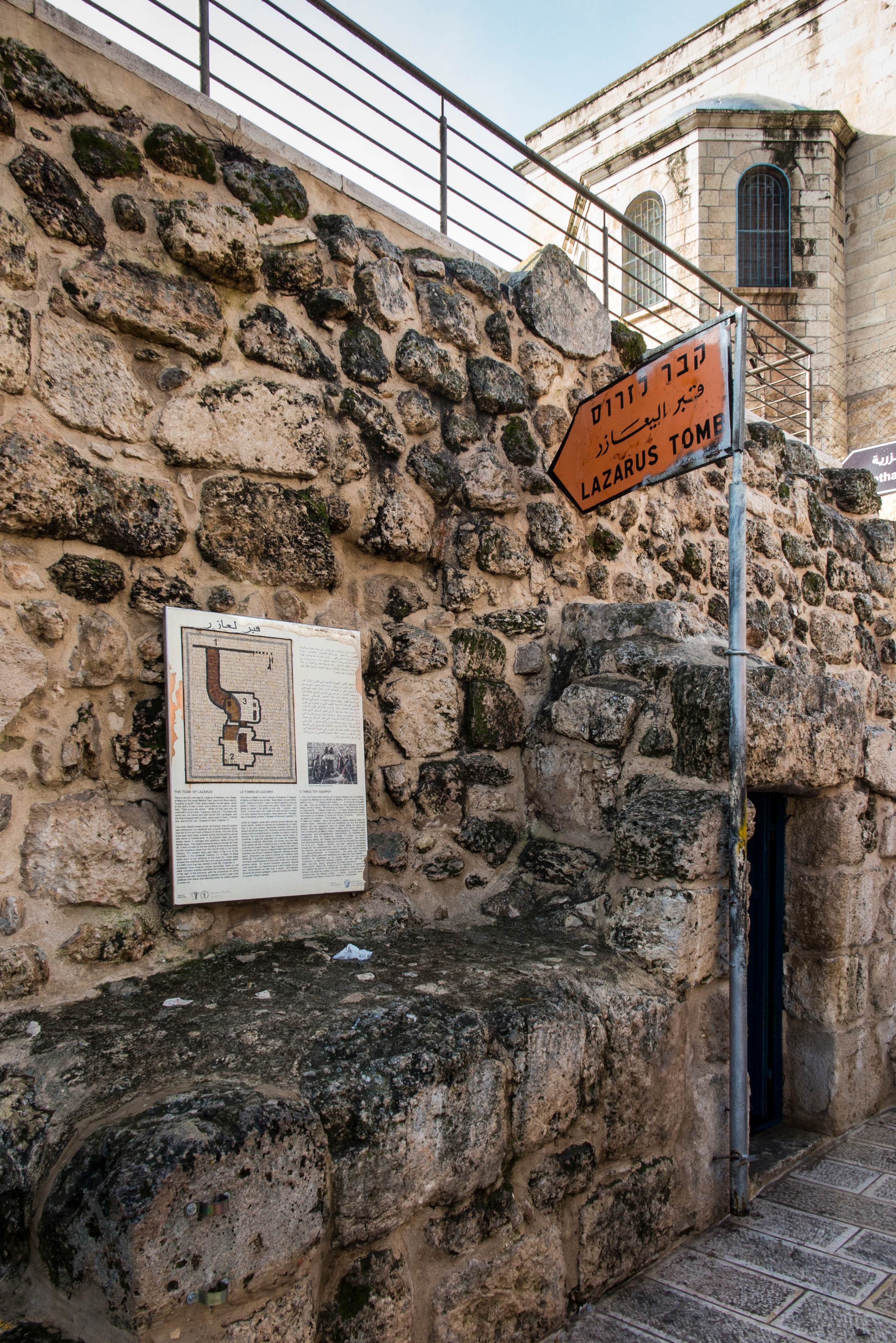
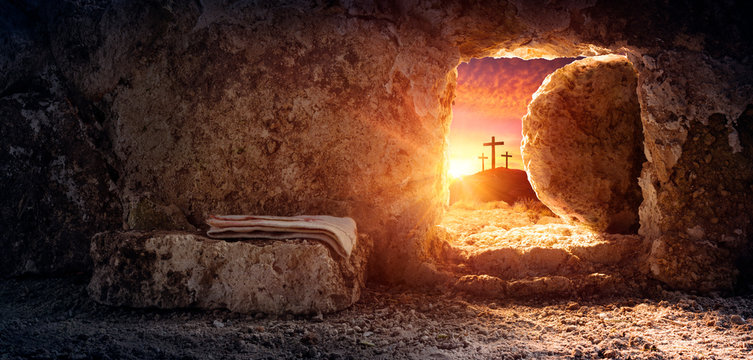
The setting matters. Lazarus has been in the tomb four days, and John says so deliberately. There was a rabbinic opinion that the soul lingered near the body for three days; by the fourth, hope of resuscitation was finished.[7] Bethany sits about two miles from Jerusalem, close enough for mourners from the city to walk out, and close enough that Jesus is standing within arm’s reach of the place where they had already tried twice to stone him (John 8:59; 10:31). Proximity to Jerusalem is proximity to his own passion.[8]
Aquinas reads the geography as a lesson. Bethany means “house of obedience,” Jerusalem means “vision of peace,” and so whoever lives in the state of obedience is already within walking distance of the peace of eternal life.[9]
Martha hears that Jesus is coming and runs; Mary stays in the house. They are in exactly the same postures as in Luke 10:38-42. Aquinas suggests the practical reason Martha heard first: she was the one moving around the house, anxious about everything, so she met the messenger. Mary was sitting farther from the door with the visitors from Jerusalem.[9]
Her greeting is faith, and it is also flawed faith. Aquinas puts his finger precisely on the flaw: Martha believed Christ had less power absent than present. That can be said of a limited, created power. It cannot be said of God, “because God is equally related to things both present and absent; indeed, all things are present to him.” And to make the point he reaches for Jeremiah: “Am I a God at hand, says the Lord, and not a God afar off?” (Jeremiah 23:23).[10] Aquinas has just handed us the link between today’s two readings. Jeremiah’s dry brook and Martha’s “if you had been here” are the same mistake wearing different clothes. Both assume God’s power runs on proximity, and both are answered by a God who is never actually absent.
Her second sentence has the same limp. “Whatever you ask from God, God will give you” is true, and it is also small. It treats Jesus as a holy man whose prayers get results, the way Elisha’s prayer once raised a dead boy.[10] So when Jesus says, “Your brother will rise again,” Martha files it under the general resurrection at the last day, standard Pharisaic teaching rooted in Daniel 12:2-3 and 2 Maccabees 7.[7] She has the doctrine correct. She has not yet noticed who is standing in front of her.
So Jesus makes his fifth “I am” declaration with a predicate: “I am the resurrection and the life.”[7] Aquinas insists this is causal language. “I am the cause of the resurrection.” Christ is the whole cause of our rising, of souls and of bodies, “for as by a man came death, by a man has come also the resurrection of the dead” (1 Corinthians 15:21). And he adds a second move: the reason Jesus can be the resurrection is that he is the life, the way a fire is the reason a snuffed candle can be relit.[11] The two titles answer two needs. Some of us have lost life and must have it restored. The rest of us have it and must have it kept.
How does a person get connected to that cause? Aquinas answers in one clause: “because by believing he has me within himself,” citing Paul, “that Christ may dwell in your hearts through faith” (Ephesians 3:17). Whoever has Christ has the cause of the resurrection inside him.[11] This is no metaphor about attitude. Jesus has already said in this same Gospel that he will raise up on the last day everyone who believes in him and eats his flesh and drinks his blood (John 6:40, 44, 54), and that a man must be born of water and the Spirit (John 3:5). The Catechism follows the same line: the Eucharist is the pledge of the resurrection of our bodies (Catechism of the Catholic Church, 994, 1000-1004).
One more thing about those four days. Augustine, and Aquinas after him, read them as four deaths: the sin of the heart, the sin of the mouth, the sin of the deed, and finally sin hardened into habit, which is Jeremiah again: “you can do good who are accustomed to do evil” (Jeremiah 13:23). Aquinas refuses to let the reading close on a technicality. “However it is explained, the Lord cleanses those having been dead four days.”[12] And he notices that the three people Christ raised were found in three different places: the little girl still in her house, the young man already being carried out the city gate, and Lazarus sealed in a tomb. Sin consented to in the heart, sin acted out in public, sin cemented by long habit. “Yet, our Lord raises all of them.”[13]
Then the question: “Do you believe this?” Aquinas notes that Jesus is not fishing for information. He knew her faith, having poured it into her himself. He asks so that the faith in her heart will come out of her mouth, “for man believes with his heart and so is justified, and he confesses with his lips and so is saved” (Romans 10:10). And what comes out of her mouth is complete. She names his office, Christ, the anointed, which in Israel means king and priest. She names his nature, Son of God. She names his mission, “he who is coming into the world.” It is Peter’s confession at Caesarea Philippi in a woman’s voice, at a graveside (Matthew 16:16).[14]
Daily Application
Something is asked of you in both readings, and it is the same thing twice.
Jeremiah wanted an explanation. He had earned one, by any reasonable accounting: obedient, celibate, hated, wounded, and God had gone quiet on him like a summer wadi. What God gives him instead is the word turn. That looks harsh until you read what turning gets him. “You shall stand before me.” “I am with you.” His complaint had opened a distance, and the turning closes it. He never receives a reason for the drought. He receives God.
So when you are in the middle of the thing God has not lifted, the diagnosis that hasn’t improved, the child who still isn’t speaking to you, the marriage you have prayed over for eleven years, the movement asked of you is repentance rather than argument. That sounds almost cruel until you try it. Stop demanding the reason and ask to be restored. Concretely: get to Confession, and when you go, bring the resentment itself as matter. Say out loud that you have been treating God as unreliable. Then pray the Rosary that night badly, at 11:40, with no feeling in it whatsoever. That is what turning looks like on a Wednesday. It is not an emotional event. It is a direction.
The second thing is Martha’s, and it is louder. Aquinas says Jesus asked her the question so that what she held in her heart would come out of her mouth. Faith wants to be said. Most Catholics I know have never once, out loud, in daylight, to another human being, said what they believe about the resurrection of the body. We recite it in the Creed at Mass on Sunday in the same tone we use for a phone menu. So this week, mean it. Say the Creed on purpose, one clause at a time, and slow down at “I believe in the resurrection of the dead.” Then tell somebody. Tell your children what you believe happens to their grandmother’s body, before there is a funeral to explain rather than after. Aquinas noticed that Martha professes her faith standing outside a tomb that still smells. That is the only place a profession of faith ever costs anything.
And if you are reading this convinced you are the four-day case, the one whose sin has calcified into habit and who has quietly stopped believing he can change, then Aquinas has already answered you. The Lord cleanses those who have been dead four days. He raises the girl in the house, the young man at the gate, and the man in the tomb. He does not sort us by how far gone we are. He came to Bethany, he wept there, and he called a decomposing man by name and got obedience.
Look at the household the Church puts before us today. Martha’s faith was imperfect, and Jesus worked with it anyway, and drew a complete confession out of her before the day was over. Mary sat still and listened, and that was not idleness. Lazarus contributed nothing at all except hearing his own name and walking out. Three friends, three entirely different capacities, one house Jesus loved enough to keep coming back to. When the Church joined all three to this memorial in 2021, she said that in the household of Bethany “the Lord Jesus experienced the family spirit and friendship of Martha, Mary and Lazarus, and for this reason the Gospel of John states that he loved them.”[15] Bethany, remember, is the house of obedience.
You are being asked a question today, at whatever tomb you happen to be standing beside. Answer it out loud: Yes, Lord.
Notes
- The Navarre Bible: Major Prophets, commentary on Jeremiah 15:10-21 and 16:1-21. ↩
- John Bright, Jeremiah, Anchor Bible 21 (Garden City, NY: Doubleday, 1965), note on Jeremiah 15:10. ↩
- Bright, Jeremiah, note on Jeremiah 15:18. ↩
- Bright, Jeremiah, notes on Jeremiah 15:19. ↩
- Origen, Homiliae in Jeremiam 14.18, quoted in The Navarre Bible: Major Prophets, commentary on Jeremiah 15:19. ↩
- Bright, Jeremiah, note on Jeremiah 15:20 and comment on Jeremiah 15:5-21. ↩
- Francis Martin and William M. Wright IV, The Gospel of John, Catholic Commentary on Sacred Scripture (Grand Rapids, MI: Baker Academic, 2015), 204-206. ↩
- Francis J. Moloney, The Gospel of John, Sacra Pagina 4 (Collegeville, MN: Liturgical Press, 1998), 327. ↩
- Thomas Aquinas, Commentary on the Gospel of John, ch. 11, lect. 4, nos. 1508-1510. ↩
- Aquinas, Commentary on the Gospel of John, ch. 11, lect. 4, no. 1511. ↩
- Aquinas, Commentary on the Gospel of John, ch. 11, lect. 4, nos. 1516-1517. ↩
- Aquinas, Commentary on the Gospel of John, ch. 11, lect. 4, no. 1507. ↩
- Aquinas, Commentary on the Gospel of John, ch. 11, lect. 4, no. 1513. ↩
- Aquinas, Commentary on the Gospel of John, ch. 11, lect. 4, nos. 1518-1520. ↩
- Congregation for Divine Worship and the Discipline of the Sacraments, Decree on the celebration of Saints Martha, Mary and Lazarus in the General Roman Calendar (January 26, 2021). ↩