
The men who tried to kill Jeremiah worked in the building. Priests, prophets, the professionally religious, the people whose whole lives were arranged around the courts of the Lord’s house. And the town that refused Jesus was the town that had watched him grow up.
Both readings today put the rejection in the same place, and it should unsettle anyone who has been Catholic a long time. Nearness to holy things can quietly take the place of faith in them. Judah had the temple. They had Josiah’s reforms behind them, the liturgy running, the courts packed on feast days. What they had lost was any capacity to hear that the building could come down. Nazareth had something more intimate still. They had Mary’s boy, thirty years of him, every fact about him filed and closed.
Familiarity feels like knowledge. Mostly it’s a decision, made years ago, to stop looking. And the real danger in it is that we’ve already settled in advance what God is permitted to say to us. Jeremiah’s hearers had reached the point where nothing that offended their sensibilities could possibly have come from the Lord.[1] It’s worth asking, honestly, whether you’ve reached it too, and about whom.
Today the Church celebrates Saint Ignatius of Loyola, whose orthodoxy was suspected and who sat in jail twice for it.

The Readings
First Reading: Jeremiah 26:1-9
In the beginning of the reign of Jehoi′akim the son of Josi′ah, king of Judah, this word came from the Lord, “Thus says the Lord: Stand in the court of the Lord’s house, and speak to all the cities of Judah which come to worship in the house of the Lord all the words that I command you to speak to them; do not hold back a word. It may be they will listen, and every one turn from his evil way, that I may repent of the evil which I intend to do to them because of their evil doings. You shall say to them, ‘Thus says the Lord: If you will not listen to me, to walk in my law which I have set before you, and to heed the words of my servants the prophets whom I send to you urgently, though you have not heeded, then I will make this house like Shiloh, and I will make this city a curse for all the nations of the earth.'”
The priests and the prophets and all the people heard Jeremiah speaking these words in the house of the Lord. And when Jeremiah had finished speaking all that the Lord had commanded him to speak to all the people, then the priests and the prophets and all the people laid hold of him, saying, “You shall die! Why have you prophesied in the name of the Lord, saying, ‘This house shall be like Shiloh, and this city shall be desolate, without inhabitant’?” And all the people gathered about Jeremiah in the house of the Lord.
Gospel: Matthew 13:54-58
And coming to his own country he taught them in their synagogue, so that they were astonished, and said, “Where did this man get this wisdom and these mighty works? Is not this the carpenter’s son? Is not his mother called Mary? And are not his brethren James and Joseph and Simon and Judas? And are not all his sisters with us? Where then did this man get all this?” And they took offense at him. But Jesus said to them, “A prophet is not without honor except in his own country and in his own house.” And he did not do many mighty works there, because of their unbelief.
Scriptural Analysis
Jeremiah’s story opens with a date stamp that’s easy to skim past. “In the beginning of the reign of Jehoiakim” translates a Hebrew phrase, rē’šit mamlekût, that isn’t vague at all. It matches an Akkadian technical term for the stretch between a king’s accession and the following New Year, before his first regnal year was counted, which puts this scene between roughly September 609 and April 608 BC.[2] So this is the very first episode in the biography Jeremiah’s secretary left us. Before anything else, we’re shown the prophet nearly lynched.
The errand is simple and brutal. Stand in the court where everyone coming up to worship has to pass, and say everything I told you to say. Do not hold back a word. That last clause is not filler. Jeremiah knew exactly what these words would provoke and what it might cost him, and he must have been tempted to trim them.[2] God tells him in advance not to.
Then he says Shiloh, and the room detonates. Shiloh had been the great shrine of the ark before Jerusalem, and the Philistines had leveled it (Jeremiah 7:12; Psalm 78:60). To promise the temple the fate of Shiloh was to attack a settled article of the official religion: the Lord had chosen this house as his eternal dwelling and would therefore never permit harm to come to it or to the city around it.[3] The charge against him was lying in God’s name, and the law of Deuteronomy demanded death for exactly that (Deuteronomy 18:20).
Which is why his opponents deserve a second look before we condemn them. Little enough good can be said of them, and still, by their lights, a man had just stood in the temple and contradicted a dogma while claiming divine authority for it, and the penalty for that was written down.[3] Notice what Jeremiah says in his own defense a few verses later. He concedes he said every word of it, and he concedes his words cut against everything the people believed. His whole case rests on one claim: the Lord sent me (Jeremiah 26:12-15). Everything hangs on that.
The verbs are worth hearing. “You shall die” renders môt tāmût, which echoes the legal formula môt yûmat used to pronounce a capital sentence, so these are likely the words a judge would have spoken.[2] And “all the people gathered about Jeremiah” uses a verb ordinarily reserved for assembling, sometimes for war, sometimes for a mob closing in (Numbers 16:3). The impression is of a man about to be killed on the spot, with the clergy preferring that the killing wear the shape of a trial.[2]
The Church has never read this chapter in isolation. The New Testament echoes are unmistakable: the Sanhedrin deliberating what to do with Jesus after his arrest (Matthew 26:59-66), the sentence Pilate hands down (Luke 23:22), and the seizing of Stephen by men who dragged him before a council on a charge about the temple (Acts 6:12-14).[1] Jeremiah standing in the court with his life in the balance is the first draft of Good Friday.
Which brings us to Nazareth. Matthew has just closed the great discourse of parables (Matthew 13:53), and Jesus goes home. The Greek patris can mean homeland broadly, but here it plainly means the town, since his family lives there and the neighbors know him.[4] The detail that he taught “in their synagogue” carries weight in Matthew, who uses that phrase elsewhere for the assemblies run by those hostile to Jesus (Matthew 9:35; 10:17; 12:9).[4]
They were astonished. Crowds have been astonished by his teaching before (Matthew 7:28), but this astonishment curdles. Aquinas explains why wonder is even possible here: wonder happens when the effect is visible and the cause is unknown.[6] These people saw the effect plainly. The wisdom was real, the mighty works were real, and they could not account for either. So they asked the right question, “where did this man get all this,” and gave it the worst possible answer. Aquinas calls their wonder foolish, since the man standing in front of them is himself the power of God and the wisdom of God (1 Corinthians 1:24).[6]
And here’s the hinge. Wonder can end in the glory of God or in scandal, and what decides it is the direction the heart leans. Some men interpret what they hear for the worse, and such men are necessarily scandalized.[6] The word Matthew uses for taking offense comes from the root behind “stumbling block.”[4] They tripped over him, and the thing they tripped on was his ordinariness.
Look at the inventory they recite. The carpenter’s son. Mary’s boy. James, Joseph, Simon, Judas. All the sisters, right here among us. Every item is true, and the whole list is a wall. Aquinas can’t resist the irony in the first one: they call him the son of the craftsman, and he is the Son of the Craftsman who fashioned the morning light and the sun (Psalm 74:16).[6] As for the brethren, Aquinas rejects the reading of Helvidius that these are children of Mary. They are kinsmen, first cousins, or relatives through Joseph, in the ordinary Semitic use of the word, the same way Abraham calls Lot his brother when Lot is his nephew (Genesis 13:8).[6] The Church holds this firmly: Mary remained ever-virgin, and the “brothers of Jesus” are close relations (Catechism of the Catholic Church, 499-501).
Why does hometown honor fail? Aquinas gives two reasons, and both are painfully recognizable. First, the people who knew you when you were weak keep dragging the weakness back into view, because it belongs to human malice to dwell on a man’s flaws rather than his perfections. Second, a fallacy the crowd falls into constantly: they assume that what is equal in one respect must be equal in every respect. They see him as their equal in family and village, so they conclude he cannot be greater in anything.[7]
Then Aquinas does something remarkable, and it is the reason the Church pairs these two readings. Commenting on this very verse he reaches back to the prophets and names one: among the prophets of the Old Testament we find none honored by his own but rather by strangers, as we read in Jeremiah, who was seized by his own people and then set free by outsiders when the city fell. And so it was with Christ, honored by outsiders and despised by his own.[7] Aquinas puts Jeremiah in the temple court and Jesus in the Nazareth synagogue side by side, thirteen hundred years apart, and says: same rejection, same shape, one is the shadow of the other.
The last verse needs care. He did not do many mighty works there. Aquinas guards the point precisely: he is omnipotent, so the failure lies entirely on their side. His miracles were ordered toward belief, and these people held him in contempt and read everything he did in the worst light, which left them undisposed to faith. He worked some anyway, so that they would be left without excuse.[8] Matthew’s word for their condition is apistia, unbelief, and he reserves it for those who reject Jesus outright. When the apostles falter, they get a gentler name, men “of little faith” (Matthew 6:30).[5] There’s a world between wobbling and refusing.
Daily Application
Start with the uncomfortable half. Nazareth is a story about what happens to the people with the most access.
You’ve been in the same parish for years. You’ve heard the Gospel of the day so many times you can finish the sentences. You know the deacon’s tics, the pastor’s homiletic habits, which cantor rushes the psalm. All of that is fine and human. The risk sitting inside it is the one Aquinas named: you begin to assume that because you and the mystery are equal in one respect, familiar, comfortable, Tuesday-morning ordinary, you’re equal in every respect, and there’s nothing left in it that could exceed you. That assumption is quiet, it feels like maturity, and it puts a ceiling on a soul.
The interior movement Jesus asks for here is repentance, and specifically repentance for a verdict you handed down a while ago and never revisited. Somewhere there’s a person, or a devotion, or a stretch of Scripture, or a teaching of the Church you’ve written off precisely because you think you already know it. Name it today. Bring the ordinary thing back and look at it as though you’d never seen it, especially the Mass. The people of Nazareth had the Incarnate Word standing in the room and got almost nothing from it, and Matthew tells you exactly why. Their own closure did it.
Then the second half, which costs more. Sometimes you’ll be the one nobody at home wants to hear.
Jeremiah is the model, and notice the shape of his courage. He delivered the whole word he was given, every syllable of it, standing still in the middle of a crowd that wanted him dead. Then he said, “as for me, behold, I am in your hands. Do with me as seems good and right to you” (Jeremiah 26:14). That’s a man who has already handed over the outcome. If you speak plainly about the faith at your own dinner table, at work, among the relatives who remember every stupid thing you did at nineteen, you’ll meet the prejudice of familiarity from the other side. You are the carpenter’s son to them. They’ll ask where you get off.
Ignatius knew this by experience. He came home from Pamplona with a leg shattered by a cannonball, and by the end of his convalescence a courtier had become a beggar-student. His own countrymen were unimpressed. Studying alongside boys decades younger, he was hauled in for questioning about his orthodoxy and jailed twice for short periods.[9] The man who would give the Church the Spiritual Exercises and the Society of Jesus was, in his own place and time, a suspicious character with a limp. He kept going. Everything for the greater glory of God, and the glory being God’s meant it did not have to be his.
And he refused to let the resistance make him hard. The counsel he left on dealing with those who disagreed is worth writing on the inside of your eyelids: show forth orthodox truth in a way that gives any opponent present an example of charity and Christian moderation, using no harsh words and showing no contempt for their errors.[9] Truth at full strength, delivered without contempt. Jeremiah managed it in the temple court with men who wanted him dead.
So do both today. Open one closed file, and speak one true word you’ve been swallowing. Do not hold back.
Preparing for Sunday
This reflection is part of the daily readings. Every week I also write a full prep guide for the coming Sunday: all four readings in full, the Fathers, Aquinas and the Catechism cited properly, and three developed themes worked out at length.
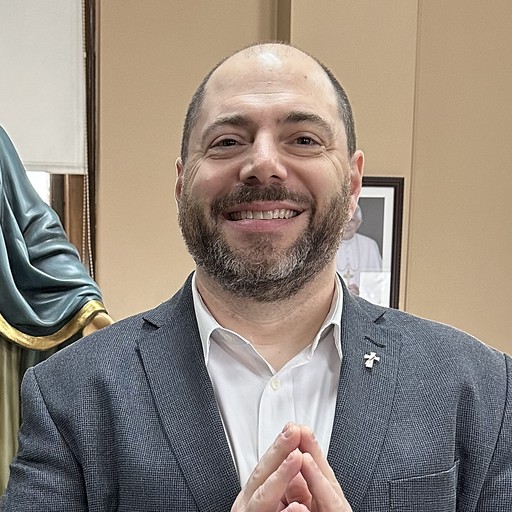
I’m a permanent deacon and I write it because I need it myself. You don’t have to preach to use it.
Notes
- The Navarre Bible: Major Prophets (Dublin: Four Courts Press), 409-10, commentary on Jeremiah 26:1-24.
- John Bright, Jeremiah, Anchor Bible 21 (Garden City, NY: Doubleday, 1965), 169-70, notes on Jeremiah 26:1, 2, 8, and 9.
- Bright, Jeremiah, 171-72.
- Daniel J. Harrington, The Gospel of Matthew, Sacra Pagina 1 (Collegeville, MN: Liturgical Press, 1991), 210-13.
- Curtis Mitch and Edward Sri, The Gospel of Matthew, Catholic Commentary on Sacred Scripture (Grand Rapids, MI: Baker Academic, 2010), 185.
- Thomas Aquinas, Commentary on the Gospel of Matthew, ch. 13, lect. 4, nos. 1210-1211.
- Aquinas, Commentary on the Gospel of Matthew, ch. 13, lect. 4, nos. 1212-1213.
- Aquinas, Commentary on the Gospel of Matthew, ch. 13, lect. 4, no. 1214.
- Franciscan Media, “Saint Ignatius of Loyola,” Saint of the Day for July 31, https://www.franciscanmedia.org/saint-of-the-day/saint-ignatius-of-loyola/.
Books Cited
As an Amazon Associate I earn from qualifying purchases.
- Curtis Mitch and Edward Sri, The Gospel of Matthew, Catholic Commentary on Sacred Scripture (Baker Academic, 2010)
- Daniel J. Harrington, SJ, The Gospel of Matthew, Sacra Pagina 1 (Liturgical Press)
- John Bright, Jeremiah, Anchor Bible 21 (Doubleday, 1965)
- University of Navarre, The Navarre Bible: Major Prophets, Four Courts Press, 2005
Leave a Reply