
The Vessel God Is Still Making
A failure can feel like a verdict. You look back at the years you gave to something hollow, the sin you keep carrying to the same confessional, the relationship you handled badly, and something in you files it as final. That’s the shape now. Fired, cooled, done.
God sends Jeremiah down to a potter’s shed to argue with that. A craftsman is elbow-deep in wet clay, and a pot has just gone wrong in his hands. Watch what he does with the ruined thing, God says. He wets it, folds it back into a lump, and starts over. Same clay. New vessel.
Then Jesus hauls a net onto a beach and sorts the catch. The good fish go into vessels, the bad get thrown away. Both readings turn on that one word, vessels, and most of us read straight past it. The Potter is making them. The angels will fill them. So the reworking on the wheel is serious business, because a day is coming when vessels get sorted.
Today’s saint is a man the Church thought had come out wrong. Solanus Casey proved otherwise.

The Readings
First Reading: Jeremiah 18:1-6
The word that came to Jeremiah from the Lord: “Arise, and go down to the potter’s house, and there I will let you hear my words.” So I went down to the potter’s house, and there he was working at his wheel. And the vessel he was making of clay was spoiled in the potter’s hand, and he reworked it into another vessel, as it seemed good to the potter to do.
Then the word of the Lord came to me: “O house of Israel, can I not do with you as this potter has done? says the Lord. Behold, like the clay in the potter’s hand, so are you in my hand, O house of Israel.”
Gospel: Matthew 13:47-53
“Again, the kingdom of heaven is like a net which was thrown into the sea and gathered fish of every kind; when it was full, men drew it ashore and sat down and sorted the good into vessels but threw away the bad. So it will be at the close of the age. The angels will come out and separate the evil from the righteous, and throw them into the furnace of fire; there men will weep and gnash their teeth.
“Have you understood all this?” They said to him, “Yes.” And he said to them, “Therefore every scribe who has been trained for the kingdom of heaven is like a householder who brings out of his treasure what is new and what is old.”
And when Jesus had finished these parables, he went away from there.
Scriptural Analysis
God gives Jeremiah an errand instead of a sermon. Go down to the potter’s house, and there I will let you hear my words (Jeremiah 18:2). The prophet who had been standing in the temple gate preaching about the sabbath (Jeremiah 17:19-27) now stands in a workshop doorway watching a tradesman. Whatever God wants said today will be said by a pair of hands and a lump of mud.
The workshop detail is worth slowing down for. The wheel of Jeremiah’s day was literally “the two stones,” a pair of stone discs on a vertical axle, the lower one spun by the potter’s feet while the upper one carried the clay he shaped as it turned.[1] Ben Sira describes the same rig, the potter sitting at his labor and turning the wheel with his feet (Sirach 38:29-30). And the Hebrew verbs in verse 4 are iterative. Jeremiah did not watch one pot collapse and go home. He stood there long enough to see it happen more than once, and to see the same response every time: the vessel spoiled in the potter’s hand, and the potter reworking it into another vessel, as it seemed good to him to do.[1]
The image reaches back much further than Jeremiah. When Scripture wants to say what God is to a human being, it keeps returning to a craftsman and dirt. The Lord God formed man of dust from the ground and breathed into his nostrils the breath of life (Genesis 2:7). Isaiah works the same ground three times, mocking the pot that says of its maker, “He did not make me” (Isaiah 29:16), then, “Woe to him who strives with his Maker, an earthen vessel with the potter!” (Isaiah 45:9), and finally turning it into a prayer: “we are the clay, and thou art our potter; we are all the work of thy hand” (Isaiah 64:8). Paul picks it up in Romans 9:20-23. Across all of them the point holds steady, the omnipotence of God and the littleness of man.[2]
There is a piece of wordplay just past today’s verses that shows how deliberate the whole scene is. In verse 11 God tells Judah, “Behold, I am shaping evil against you.” The verb is yōṣēr, and used as a noun that same word means potter, the word running through verses 2 to 6.[1] The God who shapes pots is shaping history, and Judah is standing in the clay.
But the analogy has a hinge in it, and this is where a Catholic reading has to be careful. Verses 7 through 12 turn the picture into a conditional. If a nation turns from its evil, God relents of the disaster he intended; if it does evil, he relents of the good. God expects his people to let themselves be remade, and Judah answers him flatly: “That is in vain! We will follow our own plans, and will every one act according to the stubbornness of his evil heart” (Jeremiah 18:12).[2] Clay that talks back. The image of absolute sovereignty carries inside it the terrible dignity of a creature who can say no.
Now the Gospel, and Jesus is finishing a long day of parables beside the Sea of Galilee (Matthew 13:1-2). The word behind “net” is sagēnē, the seine or dragnet, either hauled between two boats or paid out from one and drawn to shore with long ropes. It gathers whatever is in the water, edible and inedible together, and the sorting happens on the beach.[3] He is teaching in a fishing economy to people who did this for a living, and there were most likely crews working their nets within sight of him as he spoke.[3]
Aquinas reads the net two ways at once, and both are worth having. The sagena can signify the teaching itself or the Church, “since the first teachers were fishermen” (Matthew 4:18), and it is cast into the sea, which is the world.[4] “Fish of every kind” is the catholicity of the thing. The Law was given to one nation only (Psalm 147:19-20), while the Gospel gathers everyone, Greek and barbarian, wise and foolish (Romans 1:14; Mark 16:15).[4]
Then Aquinas asks the obvious question. Why tell this parable at all, when the wheat and the weeds a few verses earlier (Matthew 13:24-30, 36-43) already made the point about good and evil growing together until the harvest? His answer is sharp. The weeds signify those cut off from the Church by a difference of doctrine, and so they are not of the Church. The net holds the good and the bad who are not cut off at all.[4] The dragnet is about us. The sorting runs right through the middle of the baptized, through parishes and pews and families, and no one gets to assume which side of the boat he is on.
“When it was full” gets the same treatment. The net comes ashore when the number of the elect is complete, and the shore is the end of the world, “because there will be no disturbance among the saints, but they will be in good peace.”[5] The fishermen sit down to sort, and sitting is the posture of judgment (Matthew 19:28). The good go into vessels, and Aquinas notices Matthew’s plural: he reads the vessels as the heavenly dwellings of John 14:2, plural because the rewards differ.[5]
Hold the two readings side by side and you can see why the Church sets them on the same day. Jeremiah watches a man make vessels. Jesus describes the day the catch gets sorted into vessels. The Potter is shaping you for something specific, a vessel fit for a house with many rooms in it. And the Church has never softened the other half of the sentence. The bad are thrown into the furnace of fire (Matthew 13:50). Hell is real and eternal, the state of definitive self-exclusion from communion with God and the blessed (Catechism of the Catholic Church, 1033-1035).
Then comes the exchange that ends the discourse. “Have you understood all this?” They said to him, “Yes.” That yes carries weight. Understanding is precisely what Jesus said the crowds would lack (Matthew 13:13-15), and hearing the word and understanding it is what marks the seed on good soil (Matthew 13:23). The Twelve still have an enormous amount to learn, and they already possess something the crowds do not.[6]
So Jesus names their office. Every scribe trained for the kingdom is like a householder bringing out of his treasure what is new and what is old. A scribe was a scholar of the Law, and Ben Sira says the true scribe “penetrates the subtleties of parables” (Sirach 39:2-3). Aquinas plays on the word: they are scribes by fitness, since scriba means the instructed one, and scribes by office, because they are Christ’s secretaries, having written his commandments on the tablets of their own hearts (Proverbs 6:21) and then on the hearts of others (2 Corinthians 3:2).[7]
What’s in the storeroom? Augustine reads the old and the new as the two Testaments. The disciple knows how to open the Old Law through the New, because what is written in the Old is a figure of the New (1 Corinthians 10:11), and the figures were unveiled when the temple veil was torn (Matthew 27:51).[7] Gregory the Great reads it differently: the new is the reward of eternal life, the old is the punishment of hell, and the man who brings out both is the man who reckons with both.[7] With a furnace mentioned two verses earlier, Gregory has the context on his side.
Daily Application
The clay in Jeremiah’s story has exactly one job. Stay soft.
That sounds passive, and it is the hardest work you will do this week. Docility to God is active and it costs. It means letting the wheel keep turning when you would rather climb off and keep the shape you already have, because at least a bad shape is yours and you know its dimensions. Saint Josemaría prayed it precisely: “Lord, help me to be faithful and docile towards you, sicut lutum in manu figuli, like clay in the potter’s hands. In this way it will not be I that live, but you, my Love, who will live and work in me.”[8]
Notice which moment God points to in the workshop. He points past the finished pieces drying on the shelf and puts his finger on the collapsed one going back onto the wheel, and he says over that one, this is what I am like.
Which means the thing to fear is hardening. Clay can be reworked for as long as it stays wet; let it dry and it holds whatever shape it has, and then the potter’s thumb only cracks it. Judah’s line in verse 12 is what dried clay sounds like. “We will follow our own plans.” You can hear the same sentence in a Catholic who has quietly stopped going to confession because he has decided that this is simply who he is now. The failure was never the disaster. The settling was.
Today’s saint is what the potter’s house looks like when a man cooperates.
Barney Casey struggled through seminary in Milwaukee and left. He joined the Capuchins in Detroit, struggled again, and was ordained in 1904 as a sacerdos simplex: his grasp of theology was judged too weak, so he was forbidden to preach doctrinal sermons and forbidden to hear confessions. By every human measure the vessel had come out wrong. So they gave him the door, literally. Twenty years as porter and sacristan at St. Bonaventure Monastery, answering the bell, sitting with 150 to 200 people a day who came looking for a blessing. A Capuchin who knew him well said that the restriction “brought forth in him a greatness and a holiness that might never have been realized in any other way.”[9] When he died in 1957, an estimated 20,000 people filed past his coffin.
He stayed soft. That is the whole story. He let the Potter make a porter out of a man who had wanted to be a preacher, and the porter reached more souls than the preacher ever would have. His favorite line was “Blessed be God in all his designs.”[9] Try saying that sentence about the design you are currently arguing with, and you will feel exactly what it costs.
There’s a quiet encouragement buried in Aquinas’s note about those vessels. Matthew says vessels, plural, because the rewards are not identical.[5] The Potter is not stamping out a standard shape. Solanus Casey’s vessel and yours will not look alike, and the one he is making of you is being made for a room prepared for you specifically (John 14:2). Which means the part of your life you have written off as the damage may be the very material he is working with. The seminary Casey couldn’t finish is what put him at the door where the people were.
So take the failure you have been treating as a verdict and put it back on the wheel this week. Name it in confession, out loud, in the kind of detail that embarrasses you a little, because that sacrament is where the water hits the clay. Then do what Jesus tells the scribe to do and bring out of your treasure what is new and what is old. The old is your history, the sins and the wreckage and the years you would take back. The new is every grace you have been given since. A disciple keeps both in the storeroom, because the old shows you what you were saved from and the new shows you who saved you, and neither one by itself will keep you honest.
The net is still in the water. The wheel is still turning. Stay soft in his hands, and let him finish the vessel he started.
Preparing for Sunday
This reflection is part of the daily readings. Every week I also write a full prep guide for the coming Sunday: all four readings in full, the Fathers, Aquinas and the Catechism cited properly, and three developed themes worked out at length.
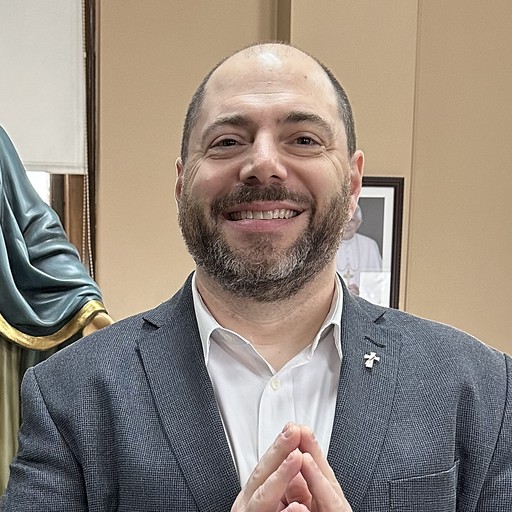
I’m a permanent deacon and I write it because I need it myself. You don’t have to preach to use it.
Notes
- John Bright, Jeremiah, Anchor Bible 21 (Garden City, NY: Doubleday, 1965), 124, notes on Jeremiah 18:3, 4, and 11.
- The Navarre Bible: Major Prophets (Dublin: Four Courts Press), 377, commentary on Jeremiah 18:1-12.
- Curtis Mitch and Edward Sri, The Gospel of Matthew, Catholic Commentary on Sacred Scripture (Grand Rapids, MI: Baker Academic, 2010), 184.
- Thomas Aquinas, Commentary on the Gospel of Matthew, ch. 13, lect. 4, nos. 1197, 1200.
- Aquinas, Commentary on the Gospel of Matthew, ch. 13, lect. 4, no. 1198.
- Mitch and Sri, The Gospel of Matthew, 184.
- Aquinas, Commentary on the Gospel of Matthew, ch. 13, lect. 4, nos. 1204, 1206-1207.
- Josemaría Escrivá, The Forge, no. 875, quoted in The Navarre Bible: Major Prophets (Dublin: Four Courts Press), 377.
- Franciscan Media, “Blessed Solanus Casey,” Saint of the Day for July 30, franciscanmedia.org.
Books Cited
As an Amazon Associate I earn from qualifying purchases.
- Curtis Mitch and Edward Sri, The Gospel of Matthew, Catholic Commentary on Sacred Scripture (Baker Academic, 2010)
- John Bright, Jeremiah, Anchor Bible 21 (Doubleday, 1965)
- University of Navarre, The Navarre Bible: Major Prophets, Four Courts Press, 2005
Leave a Reply