
Most of us have already decided. About the priest, about the parish, about the relative who came back to the faith too loudly, about the version of ourselves we were ten years ago. The verdict is in, the file is closed, and we did it without noticing. Paul tells the Corinthians to stop, and he gives a reason that should unsettle anyone who has ever been sure: the trial has not started yet. The Judge has not entered the room. And in the Gospel, the men who have already made up their minds tell Jesus that the old wine is good, which is a polite way of saying they will not be tasting his. Today the Church remembers a girl who was exiled from her own city, refused a religious community, and died at 18 with nothing built. Two hundred years later Rome canonized her. Somebody’s verdict on Rose of Viterbo was wrong.

The Readings
First Reading: 1 Corinthians 4:1-5
This is how one should regard us, as servants of Christ and stewards of the mysteries of God. Moreover it is required of stewards that they be found trustworthy. But with me it is a very small thing that I should be judged by you or by any human court. I do not even judge myself. I am not aware of anything against myself, but I am not thereby acquitted. It is the Lord who judges me. Therefore do not pronounce judgment before the time, before the Lord comes, who will bring to light the things now hidden in darkness and will disclose the purposes of the heart. Then every man will receive his commendation from God.
Gospel: Luke 5:33-39
And they said to him, “The disciples of John fast often and offer prayers, and so do the disciples of the Pharisees, but yours eat and drink.” And Jesus said to them, “Can you make wedding guests fast while the bridegroom is with them? The days will come, when the bridegroom is taken away from them, and then they will fast in those days.”
He told them a parable also: “No one tears a piece from a new garment and puts it upon an old garment; if he does, he will tear the new, and the piece from the new will not match the old. And no one puts new wine into old wineskins; if he does, the new wine will burst the skins and it will be spilled, and the skins will be destroyed. But new wine must be put into fresh wineskins. And no one after drinking old wine desires new; for he says, ‘The old is good.'”
Scriptural Analysis
Under-Rowers And House Slaves
Paul picks two words for himself, and both of them are humbling. The first is hypēretas, which he uses nowhere else in his letters. It meant the men on the lower deck of a warship, the under-rowers, the ones who pull an oar they cannot see over. The second is oikonomos, the household steward, ordinarily a trusted slave who ran the estate and supervised the other slaves.[1] Put them together, and you have Paul’s job description. He rows where he is told. He manages what is not his.
A steward takes his orders from the owner, though, which in this case is Christ, and the household he manages has no authority to redirect him.[2] So when the Corinthians line up behind their favorite preacher and rate the others, they are doing something worse than gossip. They are claiming an authority over God’s stewards that belongs to God, and God alone. What is placed in a steward’s hands is the mysteries of God, which for Paul means the plan of salvation worked out in Christ, publicly announced, nothing hidden or esoteric about it, whatever the mystery cults and fortune-tellers of Corinth were selling that year.[3]
And the one thing asked of a steward is that he be found trustworthy. The word is pistos, and it sits right next to the verb for what has been entrusted to him. Brilliance and popularity never come up.
The Human Day And The Lord’s Day
Then Paul’s language turns into a courtroom, and stays there for three verses. Judging, being found trustworthy, being acquitted, bringing to light, making manifest, commendation. Every one of those words belongs to a trial.[4]
Notice what he actually says. “It does not concern me in the least that I be judged by you or by any human court.” The Greek behind “human court” is anthrōpinēs hēmeras, literally “a human day.” Hēmera was the day a court sat, the day a case was heard. Paul coined the phrase to set it against another day he has already named, the Day of the Lord in chapter 3, when the work of each builder is tested by fire (1 Corinthians 3:13).[5] Corinth has convened its own day. Paul says its docket does not interest him, because a different day is coming.
Then the line that should stop anyone with a tidy conscience. “I am not aware of anything against myself, but I am not thereby acquitted.” Paul knows of nothing he has done wrong. He still refuses to call himself innocent. His verb is synoida, the same construction the Greek Old Testament gives to Job protesting that he knows nothing against himself (Job 27:6).[6] A clear conscience is not an acquittal, because a man can carry faults he cannot see (Psalm 19:13). So Paul hands the file over. It is the Lord who judges me.[7]
That cuts in two directions at once, and both of them are mercy. It means the harsh verdict others have passed on you is not the last word. It also means your own gentle verdict on yourself is not the last word.
So verse 5 lands as a command: do not pronounce judgment before the time. The phrase is pro kairou, before the appointed moment, and the moment is the Lord’s coming.[8] What he asks for is the humility to admit that the evidence is still coming in, since the Lord “will bring to light the things now hidden in darkness and will disclose the purposes of the heart.” The heart is where a human judge cannot go. We rule on what people do. God rules on why. The Catechism keeps this text in view when it speaks of Christ as judge of the living and the dead (CCC 678, 680-682).[9]
And then Paul does something we should not skip. He says every man will receive his commendation from God. The word is epainos, which in the Greek cities meant public recognition conferred by the authorities, the kind that got your name read out.[10] Paul expects praise to be handed out at that tribunal. He is describing a hope, and he ends the whole argument on it.
The Bridegroom Has Not Left Yet
Luke sets the argument at Levi’s banquet, so the fasting question lands while everyone is still at the table.[11] Why do John’s disciples fast and pray, and the Pharisees’ disciples fast, while yours eat and drink?
Jesus answers with a wedding. “Can you make wedding guests fast while the bridegroom is with them?” The Greek is a Semitism, “sons of the bridal chamber,” the friends of the groom whose whole job that week was to attend him and share his joy.[12] Judaism knew the logic exactly. A rabbinic list, the Scroll of Fasting, cataloged days on which fasting was forbidden because the day itself was too joyful for it.[13] Jesus is saying his presence is one of those days.
He is also saying who he is. Isaiah had promised that God would come to Israel as a husband: “as the bridegroom rejoices over the bride, so shall your God rejoice over you” (Isaiah 62:5; see 54:5-8). Luke has already put Anna in the temple, fasting, praying, and waiting for the redemption of Jerusalem (Luke 2:37). Now the one she waited for is reclining at a tax collector’s dinner, and the waiting is over. The wedding banquet has started.[14] Saint Cyril of Alexandria read it the same way, that the appearing of the Savior was a great festival, joining our nature to himself as a bride.[15]
Then Jesus names the cost of it in a single clause. “The days will come, when the bridegroom is taken away from them.” Isaiah had used that language of the servant who is taken away out of anguish and judgment (Isaiah 53:8). Jesus does not abolish fasting; he dates it. And the early Church did fast, in Acts before sending Barnabas and Saul out and before appointing elders (Acts 13:2-3; 14:23), and by the end of the first century the Didache had Christians fasting on Wednesdays and Fridays.[16] Saint Ambrose put the double truth plainly: the fast that mortifies the flesh is never given up, and yet we who have Christ and feed on his flesh and blood cannot fast, and no one can take Christ away from you unless you take yourself away from him.[17]
New Wine And A Fixed Opinion
The two parables that follow are about incompatibility. A patch cut from a new garment ruins the new one and still will not match the old. New wine put into old skins bursts them, because wine that is still working is too strong for leather that has already hardened.[18] Luke tells both, and the second one carries the freight, because wine is where he is going. At the Last Supper Jesus takes the cup and calls it the new covenant in his blood, poured out. Apart from this passage, that is the only other place Luke uses the word “new,” and the verb for the blood being shed is the same verb as the wine being spilled here.[19] The new wine is the covenant. It cannot be poured into the old arrangement without wrecking both.
Which brings us to the last line, the one only Luke has. “And no one after drinking old wine desires new; for he says, ‘The old is good.'” On the surface, it sounds like Jesus is conceding the argument, and Luke means it as irony, which is why it explains everything that has just happened.[20] The men questioning him are satisfied with the good things they already have, the law and the practices built around it, and a satisfied palate does not go looking. They will not taste the new wine, so they will never find out. To drink what is poured at this banquet, a person needs a new heart, metanoia, the change of mind these tax collectors at the table have just undergone, and the scribes have not.[21]
So both readings put the same knife in the same place. Corinth has issued a verdict before the trial. The Pharisees have issued a verdict before the tasting. In each case, the judgment is simply early, which makes it easy to commit and hard to notice.
Daily Application
Here is the uncomfortable overlap. Paul’s warning is aimed at people judging someone else, and the Gospel’s warning is aimed at people judging God’s new work. Both of them are versions of one habit: closing the case while evidence is still coming in.
Start with the easier one, the person you have already decided about. You do not have to pretend they are fine. Paul is not asking for that; he says elsewhere, plainly, that serious abuse gets reported to the authority who can act on it, and in a diocese that means the bishop.[22] What he asks is that you stop assigning motives, because motives are precisely the jurisdiction you do not have. You saw the action. You invented the reason. And the reason is what you have been holding against them for six years.
Try this today. Take one person whose file you closed, and reopen it far enough to admit you do not know why they did what they did. Forgiveness comes later. This honesty makes forgiveness possible, and most of us have never done it.
Then the harder one. Somewhere in your own life there is new wine you are declining, because the old is good. It usually wears the clothes of a preference. A prayer you have never tried because the way you already pray is fine. A confession you have not made because your conscience feels clear, and Paul just told you what a clear conscience is worth. A person the Lord keeps putting in front of you whom you have decided is not your kind of Catholic. God is doing something now, and the sincerest obstacle to it is that we were satisfied with what he did before.
Rose of Viterbo lived at the seam of both. She was ten when she joined the Secular Franciscans and started preaching in the streets, which ten-year-old girls were not supposed to do. Viterbo threw her family out of the city for taking the pope’s side. At fifteen, she tried to found a religious community and was refused. She went home to her father’s house, prayed, did penance, and died at eighteen with no order, no foundation, nothing you could point to. By every human court sitting that year, the case was closed, and she had lost. The canonization came in 1457, two centuries after the verdict.
That is what Paul means. Every day is a human day, and the file stays open until the Lord comes. So keep working the field where you were put, do not spend your strength ranking the other stewards, and hold your own case loosely enough to let him try it.
You will be commended. Wait for it.
Preparing for Sunday
This reflection is part of the daily readings. Every week I also write a full prep guide for the coming Sunday: all four readings in full, the Fathers, Aquinas and the Catechism cited properly, and three developed themes worked out at length.
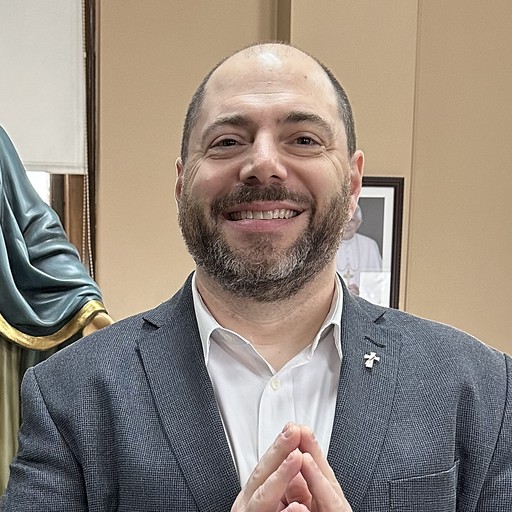
I’m a permanent deacon and I write it because I need it myself. You don’t have to preach to use it.
Notes
- Raymond F. Collins, First Corinthians, Sacra Pagina 7 (Collegeville, MN: Liturgical Press, 1999), 168, 172. ↩
- George T. Montague, First Corinthians, Catholic Commentary on Sacred Scripture (Grand Rapids, MI: Baker Academic, 2011), 82-83. ↩
- Montague, First Corinthians, 82-83; Collins, First Corinthians, 172. ↩
- Collins, First Corinthians, 167. ↩
- Collins, First Corinthians, 170, 173. ↩
- Collins, First Corinthians, 173. ↩
- Montague, First Corinthians, 83. ↩
- Collins, First Corinthians, 171. ↩
- Catechism of the Catholic Church, 2nd ed. (Vatican City: Libreria Editrice Vaticana, 1997), nos. 678, 680-682; Montague, First Corinthians, 82. ↩
- Collins, First Corinthians, 174; Montague, First Corinthians, 83-84. ↩
- Luke Timothy Johnson, The Gospel of Luke, Sacra Pagina 3 (Collegeville, MN: Liturgical Press, 1991), 99; Joseph A. Fitzmyer, The Gospel According to Luke I-IX, Anchor Bible 28 (Garden City, NY: Doubleday, 1981), 596. ↩
- Fitzmyer, Gospel According to Luke I-IX, 598. ↩
- Fitzmyer, Gospel According to Luke I-IX, 598. ↩
- Pablo T. Gadenz, The Gospel of Luke, Catholic Commentary on Sacred Scripture (Grand Rapids, MI: Baker Academic, 2018), 120-121. ↩
- Cyril of Alexandria, on Luke 5:34, in Thomas Aquinas, Catena Aurea: Commentary on the Four Gospels, Collected out of the Works of the Fathers, vol. 3, St. Luke, at Luke 5:33-39. ↩
- Gadenz, Gospel of Luke, 121; Fitzmyer, Gospel According to Luke I-IX, 596; Catechism of the Catholic Church, nos. 1430, 1438. ↩
- Ambrose, on Luke 5:34-35, in Aquinas, Catena Aurea, vol. 3, St. Luke, at Luke 5:33-39. ↩
- Fitzmyer, Gospel According to Luke I-IX, 601; Johnson, Gospel of Luke, 99. ↩
- Gadenz, Gospel of Luke, 121. ↩
- Fitzmyer, Gospel According to Luke I-IX, 602. ↩
- Johnson, Gospel of Luke, 100; Gadenz, Gospel of Luke, 121. ↩
- Montague, First Corinthians, 84. ↩
Books Cited
As an Amazon Associate I earn from qualifying purchases.
- Raymond F. Collins, First Corinthians, Sacra Pagina 7 (Liturgical Press, 1999)
- George T. Montague, SM, First Corinthians, Catholic Commentary on Sacred Scripture (Baker Academic, 2011)
- Catholic Church, Catechism of the Catholic Church, 2nd ed. (Doubleday / Image, 2003)
- Luke Timothy Johnson, The Gospel of Luke, Sacra Pagina 3 (Liturgical Press, 1991)
- Joseph A. Fitzmyer, SJ, The Gospel According to Luke I-IX, Anchor Bible 28 (Doubleday, 1981)
- Pablo T. Gadenz, The Gospel of Luke, Catholic Commentary on Sacred Scripture (Baker Academic, 2018)
- St. Thomas Aquinas, Catena Aurea: Commentary on the Four Gospels, 4-volume set (Baronius Press)
Leave a Reply